Other Items of Interest
Featured Business
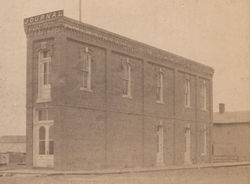
The La Cygne Journal
 |  |
|---|---|
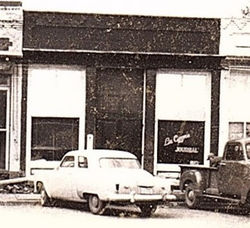 |  |
The first issue of The La Cygne Journal was published on June 18, 1870. Lucius C. Cary and John Phelps Kenea were the editors and publishers. Mr. Cary was married to Mr. Kenea’s sister, Emile.
In 1872, Lucius Cary died, and his wife, Emile, worked at the paper in his place until Rev. Albert Gore stepped in to fill the position. Ed C. Lane arrived in 1875 to become Kenea’s new partner. This partnership continued in La Cygne until 1893 when the two men decided to relocate to Clarinda, Iowa. Charles L. Shrake, who had worked at the Journal, went with them.
The business was sold to the Barber brothers, Ed T. Barber and M. S. Barber, who were at the Mound City Clarion. They purchased the name, the subscription list and the advertising contracts. Their tenure was short-lived, lasting from September 2, 1893 to December 14, 1894. During this time, the Journal was combined with the Clarion.
Charles L. Shrake returned to La Cygne to take over the helm of the Journal. At first, he was the sole editor and publisher. Then James Warren Mitchell joined him. However, in early 1896, Mitchell sold his interest to Shrake. At this point, W. A. Stacey joined Shrake in the business. They published the paper from May 15, 1896 to November 13, 1896.
At this point, J. W. Mitchell once again bought the newspaper and became editor and publisher. Mitchell married Jessie Louise Shrake, a photographer and the sister of Charles L. Shrake. He continued to publish the Journal until he retired in 1945.
In 1945, Mitchell’s daughter, Eleanor Mitchell Rose, and her husband, Rudolph Frederick (Rudy) Rose took over running the newspaper. They continued to do so until they retired. The Journal was sold to Jerry Leonard with the understanding that he would keep the newspaper in La Cygne. He did so for a while, but then he sold to the Linn County News.
Who's Who in La Cygne?
Dr. Howard L. Clarke
 Dr. Howard L. Clarke |  Newspaper ad for Dr. Clarke |
|---|---|
 Dr. Clarke's tombstone |  Dr. Clarke's fez is one of our artifacts. |
Howard L. Clarke was born November 19, 1868 in Jacksonville, Illinois. He had two brothers, Hugh F. and William E., and one sister, Mary. Their parents were Edwin M. and Emma Jane (Filson) Clarke. According to Edwin’s obituary, the family was descended from William Clarke of the famed Lewis and Clarke expedition in 1803.
Most of Howard’s younger years were spent on a farm east of Olathe, Kansas. He attended high school in Olathe, followed by a short period of time spent farming and teaching rural school. But his desire was to be a doctor. He attended the Kansas Medical College in Kansas City, Kansas and obtained his license to practice in 1898. He worked for a short time with an elderly doctor in Olathe before coming to La Cygne where he assisted Dr. R. G. Mendenhall who had been elected to the legislature.
Doctor Clarke was very active in community affairs. He was a member of the Methodist Church and the Linn County Medical Association. In addition, he was involved in several of the local lodges, including the Masons, the Order of Eastern Star, the Mirza Shrine, the Odd Fellows and the Modern Woodmen. Dr. Clarke was the Frisco physician for La Cygne. He was also a member of the La Cygne Gun Club and the La Cygne Commercial Club.
In March of 1921, Dr. Clarke was elected mayor of La Cygne. He also served as a city councilman in 1901.
Dr. Clarke’s office occupied several different spaces throughout the years. These include an office above the Linn County Bank, an office above Carroll’s Grocery Store and an office in the Conley Building.
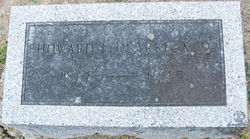
Dr. Clark died October 12, 1945 at his daughter’s home in Lawrence, Kansas. He was buried in Oak Lawn Cemetery beside his wife.
Military Hero
Captain/Brevet Major Samuel Hymer
Congressional Medal of Honor recipient
 |  |
|---|
Samuel Hymer was born on May 17, 1829 in Harrison County, Indiana. His parents were John B. Hymer and Sarah Ellen (Jackson) Hymer. He married Mary Jane Thompson on January 18, 1849.
Samuel enlisted in the Army on September 13, 1862 in Rushville, Illinois. He was commissioned as an officer in the 115th Illinois Volunteer Infantry on September 16, 1862, and was mustered in as a 2nd Lieutenant in Company D. He was promoted to 1st Lieutenant on May 26, 1863, and Captain and company commander on December 9, 1863. Samuel received recognition for his actions at Buzzard Roost Gap in Georgia. In spite of a valiant effort, the small group of soldiers was forced to surrender and all were taken prisoner. Samuel Hymer was taken to Camp Sorghum in Columbia, South Carolina. When General Sherman approached the area, Samuel was sent to Charlotte, North Carolina as part of a prisoner exchange. He mustered out on May 15, 1865.
In 1866, Samuel and Mary moved to Miami County, Kansas. Then in 1882, Samuel purchased the Aaron Wise farm northeast of La Cygne.
While living in La Cygne, Samuel was a very active member of the community. As a preacher, he often filled the pulpit of various Methodist Episcopal churches in the area. He was a member of the Robert B. Mitchell Post 170 of the G.A.R. where he served as chaplain. In addition, he was president of the La Cygne District Fair Association and vice-president of the Linn County Agricultural Society. Other organizations he was involved with were La Cygne Lodge No. 66, I.O.O.F. and the Lincoln Township Board where he served as treasurer. Samuel and Mary continued to live in La Cygne until March of 1904. At that time, they returned home to Rushville, Illinois where Samuel passed away on May 9, 1906.
On March 28, 1896, Samuel was presented the Congressional Medal of Honor.
“The President of the United States of America, in the name of Congress, takes pleasure in presenting the Medal of Honor to Captain (Infantry) Samuel Hymer, United States Army, for extraordinary heroism on 13 October 1864, while serving with Company D, 115th Illinois Infantry, in action at Buzzard’s Roost Gap, Georgia. With only 41 men under his command, Captain Hymer defended and held a blockhouse against the attack of Hood’s Division for nearly ten hours, thus checking the advance of the enemy and insuring the safety of the balance of the regiment, as well as that of the 8th Kentucky Infantry, then stationed at Ringgold, Georgia.”